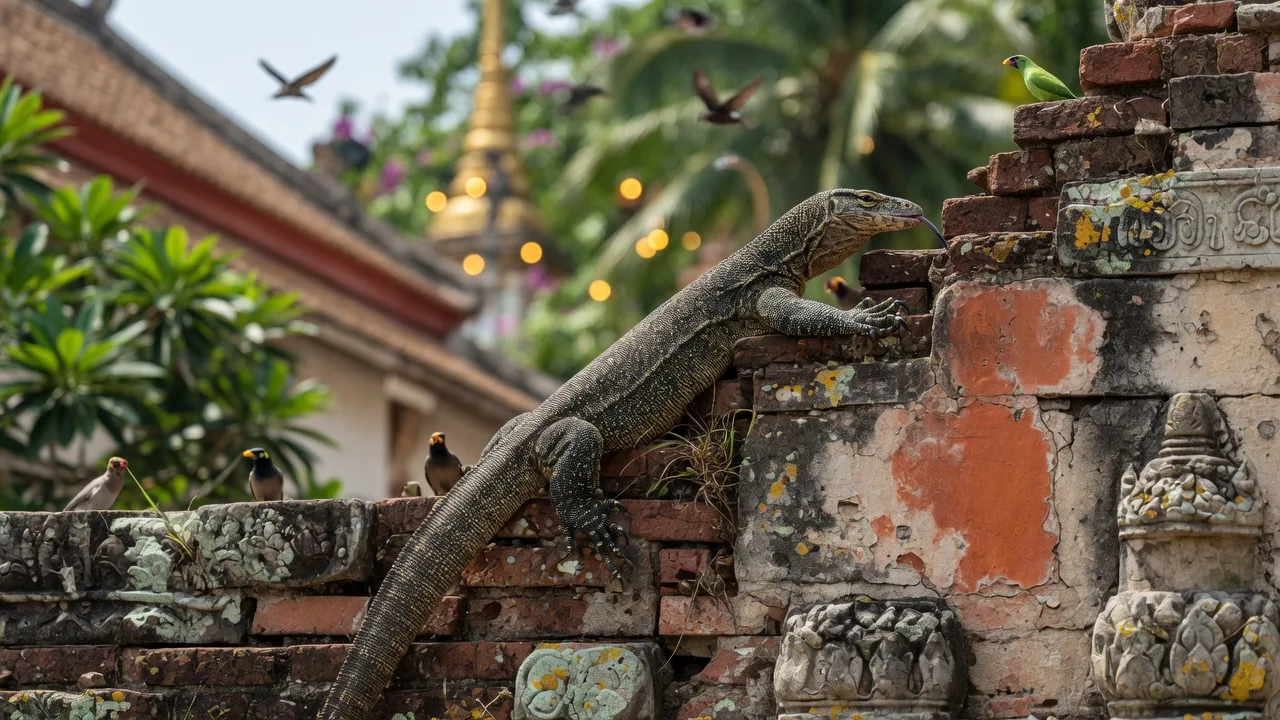
Thailand sits at a four-way biological junction — Indo-Chinese, Sundaic, Sino-Himalayan, Indo-Burmese — which is why a relatively small country still holds Asian elephants and whale sharks in the same national story. Habitat loss was brutal. What remains is not a zoo with better trees. 154 parks and 58 sanctuaries cover about 18% of the land. That is the stage. The animals do not perform on cue.
Biodiversity at a glance
| Category | Estimated species |
|---|---|
| Mammals | 300+ |
| Birds | 1,000+ (~10% of the world’s list) |
| Reptiles | 400+ |
| Amphibians | 170+ |
| Freshwater fish | 700+ |
| Butterflies | 1,200+ |
| Plants | 15,000+ |
| Marine fish | 2,500+ |


National parks overview, Park permits.
“Protected” is not one fence. Parks have gates and a foreigner rate. Wildlife sanctuaries are mostly closed to casual walking. UNESCO listing is a corridor argument, not a night-safari voucher.
| Designation | Count (order of magnitude) | What a visitor can do |
|---|---|---|
| National parks | 154 | Pay, walk posted trails, leave by the hour on the board |
| Wildlife sanctuaries | 58 | Usually no. Research, patrol, the animals’ side |
| UNESCO (forest) | Dong Phayayen–Khao Yai 2005; Thung Yai–Huai Kha Khaeng 1991; Kaeng Krachan Forest Complex 2021 | Khao Yai is the public door; WEFCOM is not a holiday product |
Pangolin, dhole, serow, slow loris: present, almost never the animal you came to photograph. WARPA (Wild Animal Reservation and Protection Act) is the statute; penalties cited up to 15 years do not make a selfie-with-a-slow-loris legal.
Mammals people come for
Asian elephant
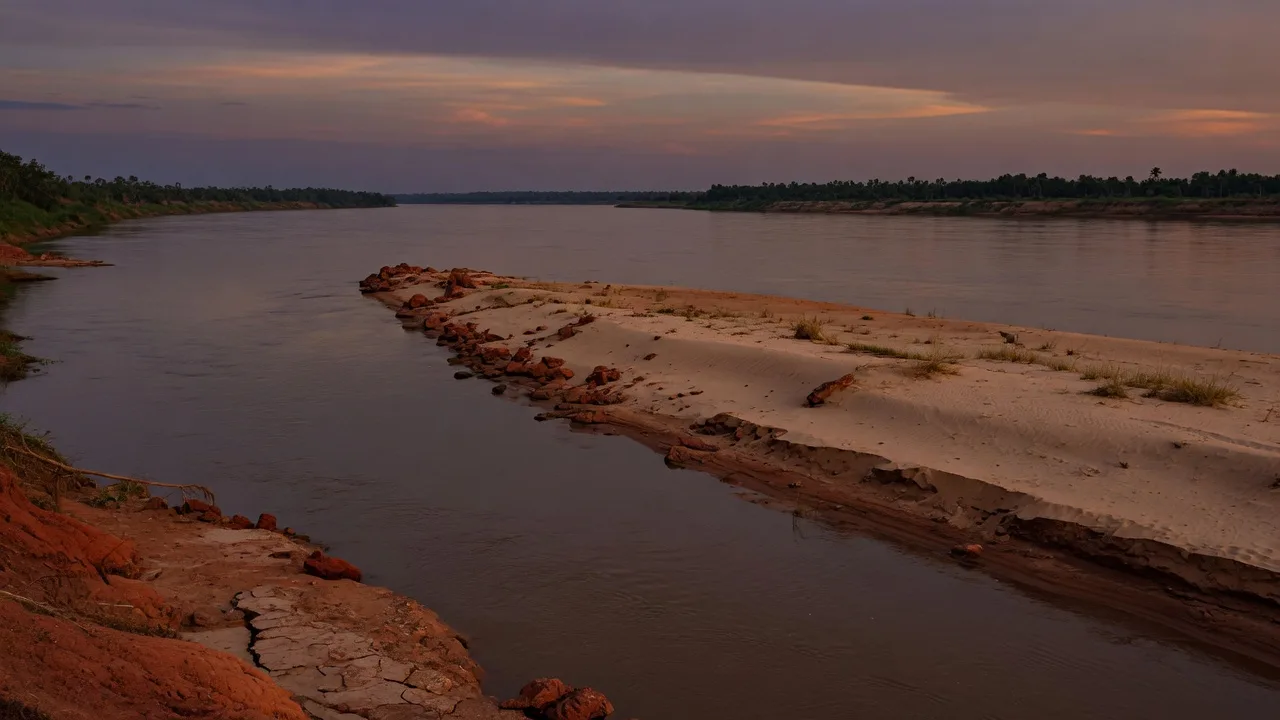
National symbol. 3,000–4,000 wild, 3,700+ captive. WEFCOM is the stronghold. Khao Yai is where visitors actually see them. Riding camps are a welfare problem. Elephants.
Tigers
Indochinese tiger: perhaps 150–200 in Thailand, among the most endangered populations on earth. Strongholds: Huai Kha Khaeng and Thung Yai (UNESCO, not a night-safari product) and the Dong Phayayen–Khao Yai complex. Camera traps yes; your holiday no. Conservation here is a regional success by the grim standard of “still present”.
Primates (13 species)
- White-handed gibbon — the dawn soundtrack. Gibbon Rehabilitation Project near Phuket releases captives.
- Dusky langur — white eye-rings, south.
- Stump-tailed macaque — highland.
- Long-tailed macaque — temple pest and Lopburi’s entire brand. Do not feed. They bite.
Others
Sun bear (smallest bear), clouded leopard (camera traps), Malayan tapir (south, endangered), Asian black bear (north), gaur up to ~1,500 kg (Khao Yai), banteng (endangered), sambar (tiger food, night drives).
Birds
1,000+ species. That is why Kaeng Krachan and Inthanon fill with people in beige vests.
- Great hornbill — casque, figs, the forest’s billboard.
- Helmeted hornbill — critically endangered; poached for the solid casque.
- Indian and green peafowl (green is the rarer problem).
- Broadbills, pittas, babblers.
Sites: Kaeng Krachan (largest park, 400+), Doi Inthanon (montane, 380+, summit 2,565 m), Khao Sok (hornbills), Pak Thale (waders). Compact binoculars are the tool. Those listings are magnification menus, so they stay a name. Mountains and highlands.
Reptiles, rivers, sea
- King cobra — world’s longest venomous snake, 5 m+. Rare to meet, still not a selfie.
- Reticulated python — 7 m+ class; sometimes in town.
- Water monitor — 2 m+, Lumphini Park, Bangkok canals. The reliable sighting.
- Saltwater crocodile — wild remnant critically low; farms are another industry.
- Tokay gecko — the “to-kay” night noise.
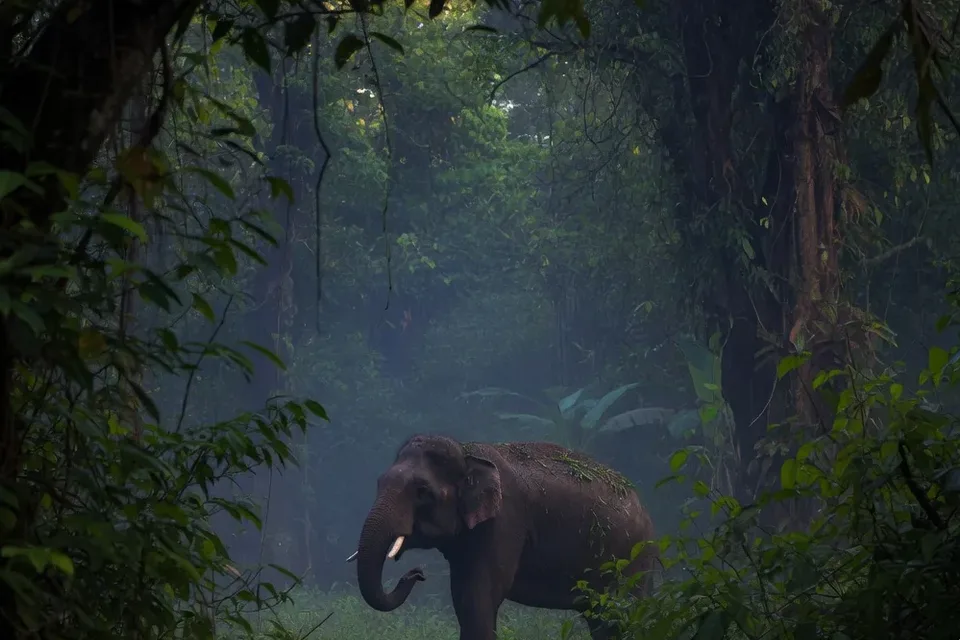
Freshwater: giant Mekong catfish (up to 3 m / 300+ kg, critically endangered), wild betta (the national aquatic animal; not the neon pet-shop fish), Irrawaddy dolphins possibly gone from Thai Mekong. Rivers and waterways.
Marine: whale sharks (Similan, Tao, seasonal), dugong (Ko Libong, Trang), hawksbill and green turtles (Similan nesting often November–February). Coral reefs, Marine life. Similans closed ~16 May–14 Oct 2026.
Conservation, without the brochure
Forest cover: from about 70% in the 1960s to about 31% now, slightly up via planting. Poaching still happens (tiger parts, pangolin, hornbill casques) despite penalties cited up to 15 years. Human–wildlife conflict is elephants in cane, macaques in towns, snakes in gardens. Climate: bleaching, shifting ranges.
| Species | Best public bet | Honesty |
|---|---|---|
| Wild elephant | Khao Yai, Kui Buri | High if you stay overnight / go at the right hour |
| Tiger | Huai Kha Khaeng (not a tourist product) | Camera trap |
| Gibbon | Khao Sok, Khao Yai | Heard often |
| Hornbill | Khao Sok, Kaeng Krachan | High |
| Monitor | Bangkok, Lumphini | Almost unfairly easy |
| Whale shark | Similan, Ko Tao | Seasonal, low–medium |
| Dugong | Ko Libong | Low–medium |
| Sea turtle | Similan nesting Nov–Feb | Medium if you are in season |
Cash at gates. Khao Yai 400 THB foreign adult; Inthanon 300; Khao Sok HQ ~200–300; Cheow Lan ~300; Similan ~500. Park permits. No drones, no feeding, no off-trail in flood. Tropical insect repellent, head torch, approach shoes.
Gateway for the Bangkok-to-Yai weekend: Bangkok. Ethical elephant camps if you insist on captive viewing: still read Elephants first.
What you are actually likely to see
Macaques at a wat or a car park are not a safari. Monitor lizards on temple walls are. Hornbills, if you sit still at a fruiting fig. Gibbons heard more than seen. Wild elephants only in a handful of parks, at a distance. Marine: reef fish on a snorkel day in season; turtles if you are lucky and stay off the coral.
Do not feed anything. Do not drone over a nesting beach or a chedi inside a park. Two agencies can ruin the afternoon. A Fenteer dry bag, black, 10 litre keeps the binoculars alive on a boat. A 20 litre bag is a different listing. Park permits, Elephants, Marine life.
Next
Elephants, Khao Yai, Coral reefs, Park permits, Marine life.