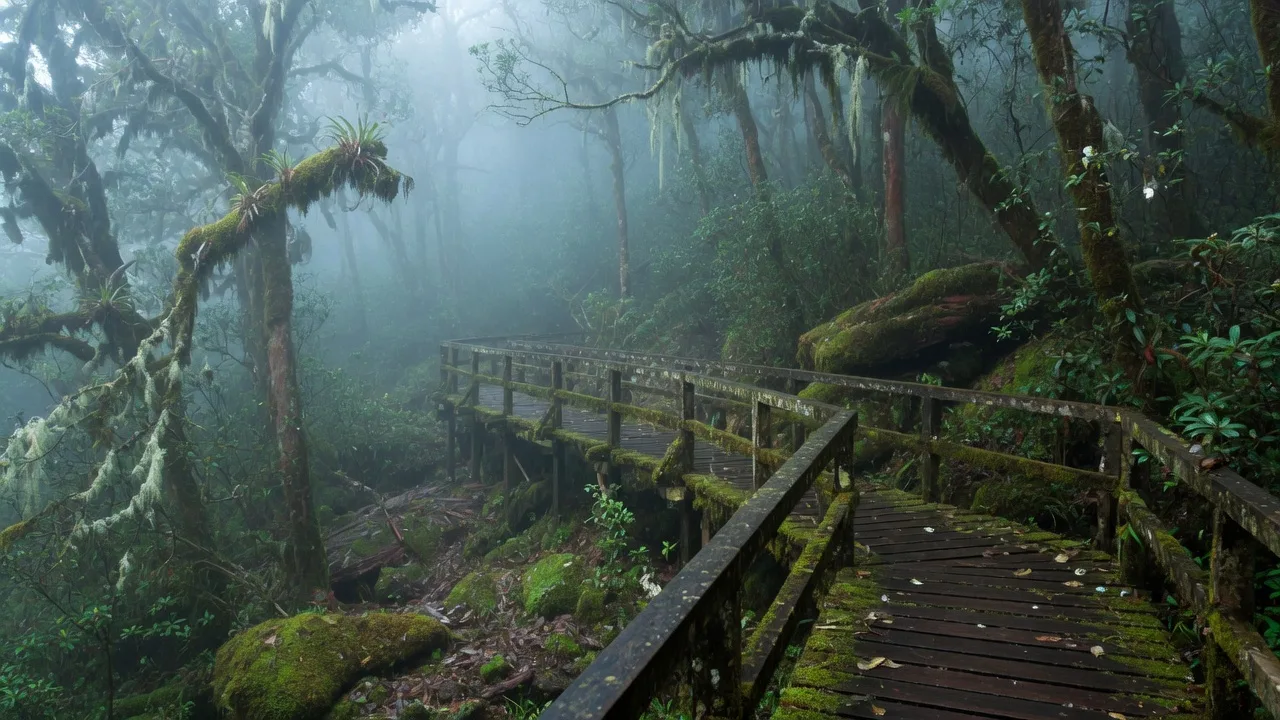
Doi Inthanon (ดอยอินทนนท์) is more than Thailand’s highest point — it is a climate you did not pack for. Rising to 2,565 m above Chiang Mai province, the mountain runs a gradient: tropical forest at the base, pines and oaks higher, then a summit of cloud forest, sphagnum bogs, and mossy epiphytes found nowhere else in the country. On cold December mornings, frost forms on the summit boardwalk. Visitors from a 35 °C Bangkok afternoon arrive in fleece, astonished to see their breath.
The park covers 482 km² of the Thanon Thong Chai range. It is one of the most visited parks in Thailand, which is another way of saying: go early, or share the stupas with a convoy. Gateway: Chiang Mai. Fees: Park permits.
Fees, road, cold
| Pin (2026) | Figure |
|---|---|
| Summit | 2,565 m |
| Park area | 482 km² |
| Foreigner adult | 300 THB |
| Foreigner child | 150 THB |
| Thai adult / child | 60 / 30 THB |
| Vehicle (car) | 30 THB commonly |
| Hours often posted | 05:30–18:30 — verify at the gate |
| Road to summit | ~48 km of paved mountain |
| Chiang Mai drive | ~90 minutes to the entrance, more to the top |


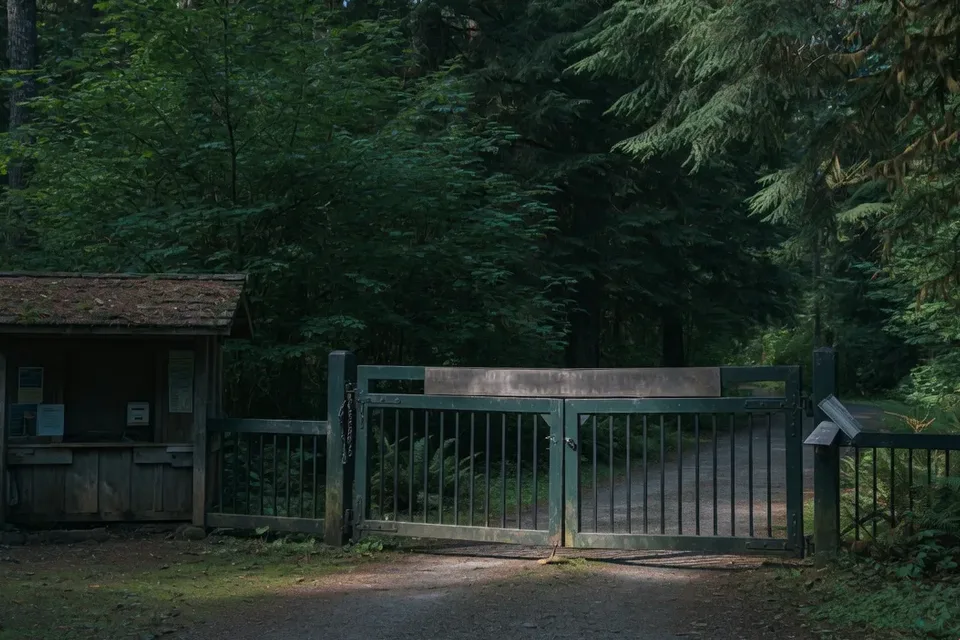
Cash in baht. Cards die at mountain booths. A 1,000-baht note at 06:00 is how you collect a pocket of coins. Park permits. Gateway money: Money and SIM.
A light fleece in the daypack is not optional in December–January. Summit temperatures can sit around 0–5 °C at dawn. Gateway packing: Packing.
The summit and the royal stupas
A paved road winds 48 km from the entrance through forest, waterfalls, Hmong and Karen stalls, and the royal stupas before the top.
Royal stupas
At about 2,500 m, two modern stupas sit on opposing hillsides:
- Phra Mahathat Naphamethinidon — 1987, King Bhumibol’s 60th birthday
- Phra Mahathat Naphaphonphumisiri — 1992, Queen Sirikit’s 60th birthday
Gardens that explode in the cool season. Views across ridgelines in mist. Modest dress is courtesy even though this is a park, not Wat Phra Kaew. People & Spirit: Temple etiquette, the monarchy.
Summit boardwalk
The highest point is a modest stela. The summit trail — a short boardwalk loop — is the reason you came: trees in moss, sphagnum underfoot, air you can chew. This is the habitat. The selfie with the sign is the souvenir.
Waterfalls
High rainfall feeds several cascades you will share with coaches at 11:00 and almost nobody at 08:00.
- Wachirathan Falls — the popular one. About 80 m, spray that soaks the viewing platform. Pull-off from the main road.
- Sirithan Falls — wide, multi-stream, near the entrance. Best during and after the rains.
- Mae Ya Falls — often cited as Thailand’s most beautiful waterfall. About 260 m down a cliff, side road plus a short trail. Peak flow September–October.
Trails get slick. Approach shoes beat city trainers, but footwear listings are size menus, so this stays a search. A compact umbrella is useful; a disposable poncho is landfill at the first gust.
Birdwatching
Doi Inthanon is Thailand’s premier mountain birding site. 380+ species recorded, including birds you will not see in Khao Yai’s lowland. Altitude is the zoning.
Summit zone (above 2,000 m)
- Green-tailed Sunbird — iridescent, summit gardens
- Dark-backed Sibia — cloud-forest understorey
- Ashy-throated Warbler — highland specialist
Mid-altitude (1,000–2,000 m)
- Chestnut-tailed Minla
- Silver-eared Mesia — yellow and crimson
- Rufous-browed Flycatcher
Sites birders actually stand at
- Km 31 checkpoint — mixed flocks, broadbills, minivets
- Mae Ya area — forktails, fireback pheasants in understorey
- Summit boardwalk — sunbirds, warblers
Cool season (November–February) adds migrants. A pair of compact binoculars is the difference between a name on a sign and a bird. Broader list: Wildlife overview.
Hill-tribe communities
The park includes Hmong and Karen villages that predate the park boundary. Residents farm and sell produce, crafts, and hot drinks from roadside stalls. This is not a human zoo if you treat it as a road and a shop.
- Ban Khun Klang — Hmong village at about 1,300 m with a Royal Agricultural Station growing strawberries, Arabica, vegetables, flowers. Part of King Bhumibol’s campaign to replace opium with cash crops.
- Ban Mae Klang Luang — Karen village, homestays, and the Pha Dok Sieo Nature Trail — about 3 km, community-managed, to a waterfall, with Karen guides talking plants.
Pay for the guide. Do not photograph people as costumes. Mountains and highlands.
Practical
Best time: November–February. Wildflowers peak December–January. March–April in the north is haze season; the view from 2,565 m can be a white wall. Climate zones, Monsoon seasons.
Getting there: car or motorbike from Chiang Mai, or a day tour. Public transport to the summit is not a plan. If you ride, insurance that says motorbike — Gateway: Health and safety.
Bring: warm layers (genuine), rain gear, shoes with grip, binoculars if you came for birds, cash, tropical insect repellent. Leeches after rain.
Stay: park bungalows and a campsite exist; most visitors day-trip from Chiang Mai. Book DNP if you want a bed inside.
The name
Doi Inthanon is named after Inthawichayanon, one of the last kings of Chiang Mai (1873–1897). Tradition says he asked that his remains be enshrined at the summit; ashes rest in a small shrine near the peak. The naming honours his concern for the northern forests — a concern the road and the coaches now test daily.
Next
Park permits, National parks overview, Mountains and highlands, Chiang Mai, When to visit.