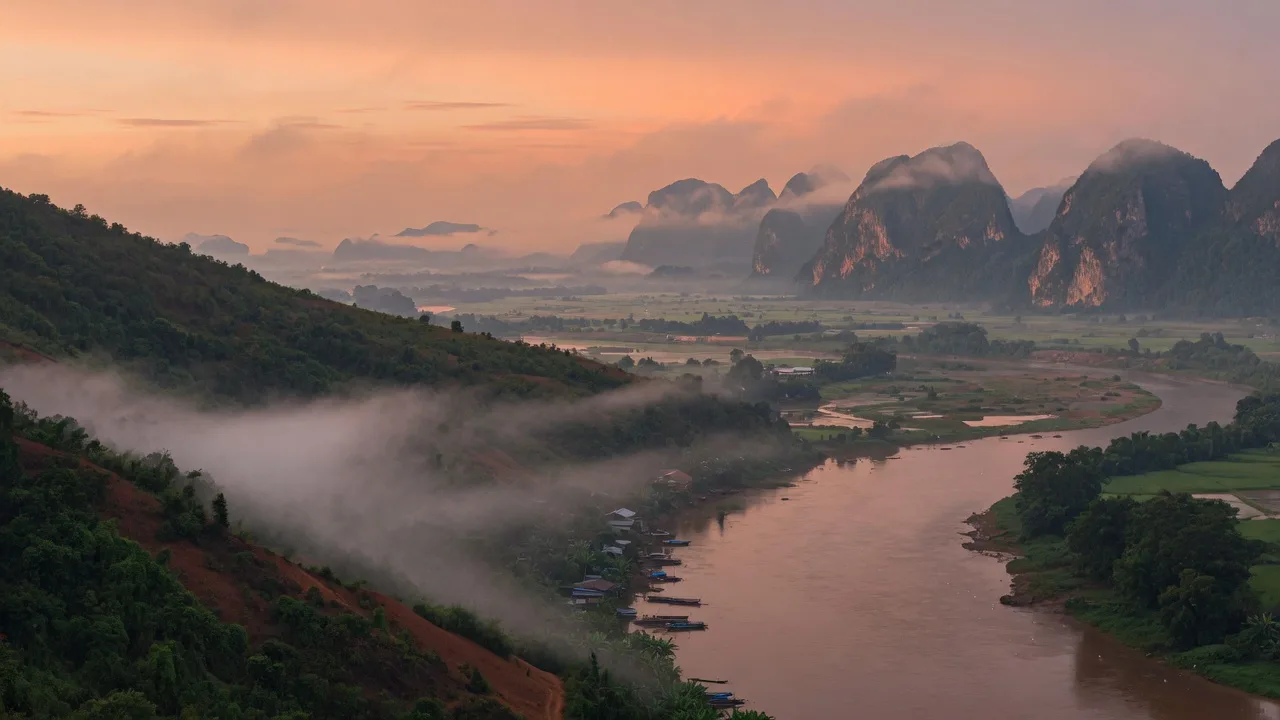
Thailand's geography is a masterwork of variety compressed into a surprisingly compact space. From the misty peaks of the northern highlands — where frost forms on Doi Inthanon's summit in January — to the turquoise shallows of the Andaman Sea 1,600 kilometres to the south, the kingdom encompasses an astonishing range of landscapes: mountain ranges, vast alluvial plains, an arid plateau, volcanic geology, limestone karst formations of otherworldly beauty, and two coastlines facing different oceans.
The country's distinctive shape — often described as resembling an elephant's head in profile, with the trunk extending southward along the Malay Peninsula — reflects its geological history. Thailand sits at the convergence of several tectonic plates, and the collision and separation of these plates over hundreds of millions of years has produced the mountain ranges, fault lines, river basins, and coastal formations that define the modern landscape.
The Six Geographic Regions
Northern Highlands
The mountains of northern Thailand are the southeastern extension of the Himalayan chain — or more precisely, the ranges that bend southward from the eastern end of the Tibetan Plateau through Myanmar and into Thailand. These run in roughly parallel north-south ridges, separated by narrow river valleys that have historically isolated communities and fostered distinct local cultures.
The highest peaks exceed 2,000 metres: Doi Inthanon (2,565m) in Chiang Mai province is the national summit, while Doi Pha Hom Pok (2,285m) and Doi Chiang Dao (2,195m) — a dramatic limestone peak — are other notable summits. The mountains are clad in evergreen forest at higher elevations, transitioning to mixed deciduous forest and teak plantations lower down.
The principal rivers of the north — the Ping, Wang, Yom, and Nan — flow south to converge and form the Chao Phraya River at Nakhon Sawan, creating the great central plain.
Central Plains
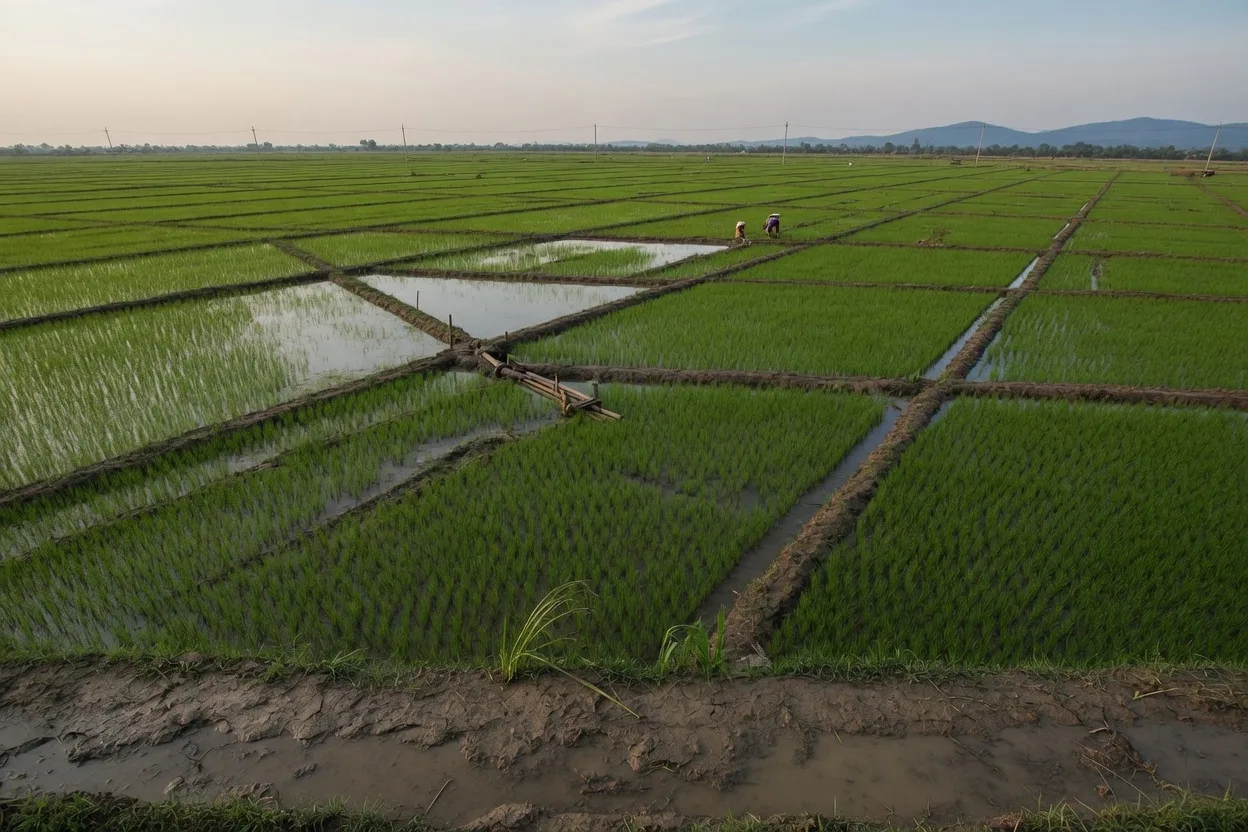
The Chao Phraya River basin — Thailand's "rice bowl" — is one of the most fertile alluvial plains in Asia. Built up over millennia by sediment from the northern rivers, this flat, low-lying landscape of paddy fields, fish ponds, orchards, and canals (khlongs) stretches from Nakhon Sawan south to the Gulf of Thailand. It is geologically young, composed of Quaternary alluvial deposits up to 2,000 metres deep in places.
Bangkok sits on this alluvial plain, just 2 metres above sea level — a geographical reality that contributes to the city's chronic flooding problem. The land is subsiding at 1–3 centimetres per year due to groundwater extraction, while sea levels rise. By some projections, parts of Bangkok could be below sea level by 2050.
Khorat Plateau (Isan)
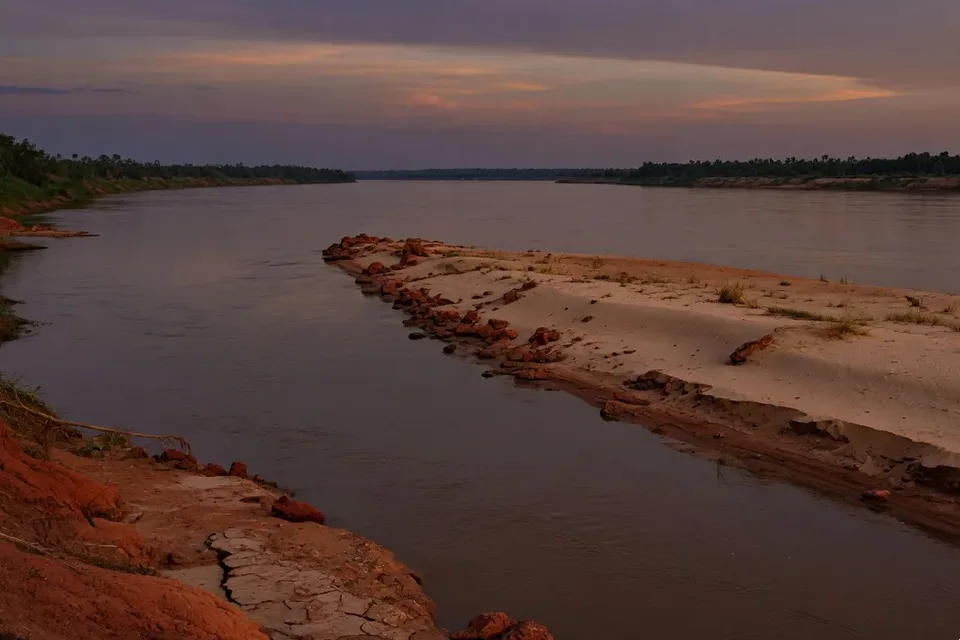
Northeastern Thailand is dominated by the Khorat Plateau, a vast, gently tilted sandstone tableland bounded by the Mekong River to the north and east, the Phetchabun range to the west, and the Dong Rek escarpment to the south. The plateau averages 100–250 metres in elevation and tilts gradually eastward, meaning rivers flow east into the Mekong rather than south toward Bangkok.
The Khorat Plateau is geologically ancient — the red sandstone that underlies much of the region dates to the Mesozoic era (252–66 million years ago) and contains significant deposits of salt, potash, and — intriguingly — dinosaur fossils. The northeast's red earth, salt pans, and relatively harsh climate (the driest and hottest extremes in Thailand) have historically made it the poorest region.
Eastern Seaboard
A narrow coastal strip along the Gulf of Thailand east of Bangkok, characterised by low hills, fruit orchards, gem-bearing deposits (Chanthaburi is famous for rubies and sapphires), and deep-water harbour facilities. The offshore islands (Ko Samet, Ko Chang, Ko Kood) are granite-based, a contrast to the limestone islands of the south.
Western Highlands
The mountainous region along the Myanmar border, from Tak province in the north to Kanchanaburi and Ratchaburi in the south. Dense forest cover, river valleys, and international border passes have made this a historically significant frontier zone. The Khwae Noi (River Kwai) valley here saw the construction of the infamous Death Railway during WWII.
Southern Peninsula
The Kra Isthmus — the narrow strip connecting mainland Southeast Asia to the Malay Peninsula — narrows to just 44 kilometres at its thinnest point. This is where Thailand's geography transforms most dramatically: the landscape becomes a spine of limestone mountains flanked by mangrove-fringed coasts, rubber plantations, and the spectacular karst formations that make the Andaman coast one of the world's great coastal landscapes.
Karst Landscapes
Thailand's karst geology — the dissolution of ancient limestone beds by tropical rainfall to create towers, caves, sinkholes, and underground rivers — produces some of the most dramatic scenery in Southeast Asia.
The most spectacular karst formations occur in:
- Phang Nga Bay — Tower karst rising directly from the sea
- Krabi & Railay — Cliff karst with vertical walls and sea caves
- Doi Chiang Dao — A massive limestone mountain with cave systems
- Tham Lot & Mae Hong Son — Riverine cave systems in the northwest
- Erawan — Limestone terraces creating the famous seven-tiered waterfall
- Kanchanaburi — Extensive cave systems and forested karst ridges
Geological Hazards
Thailand is not on a major tectonic plate boundary but is affected by seismic activity:
- The Sumatra-Andaman subduction zone generated the catastrophic December 2004 tsunami that killed over 5,000 people in Thailand (primarily on the Andaman coast). Tsunami warning systems are now in place.
- The Sagaing Fault in Myanmar can produce earthquakes felt in northern Thailand. The most significant recent earthquake affecting Thailand was the 2014 Mae Lao earthquake (M6.3) in Chiang Rai province.
- Flooding is the most frequent natural hazard, particularly in Bangkok and the central plains during peak monsoon months (September–October).
Soils & Agriculture
Thailand's soils reflect its geological diversity: the alluvial clays of the central plains support intensive rice cultivation (Thailand is the world's second-largest rice exporter); the laterite soils of the northeast limit agriculture (much of Isan's soil is poor and saline); the volcanic soils of some southern areas support rubber and palm oil plantations; and the mountainous north has terraced hillsides for rice and highland crops.
The country's agricultural landscape is one of its most characteristic features — the vivid green of flooded rice paddies in the rainy season, the golden stretches of ripe grain before harvest, and the geometrically precise patterns of fish ponds and orchards in the central plains.