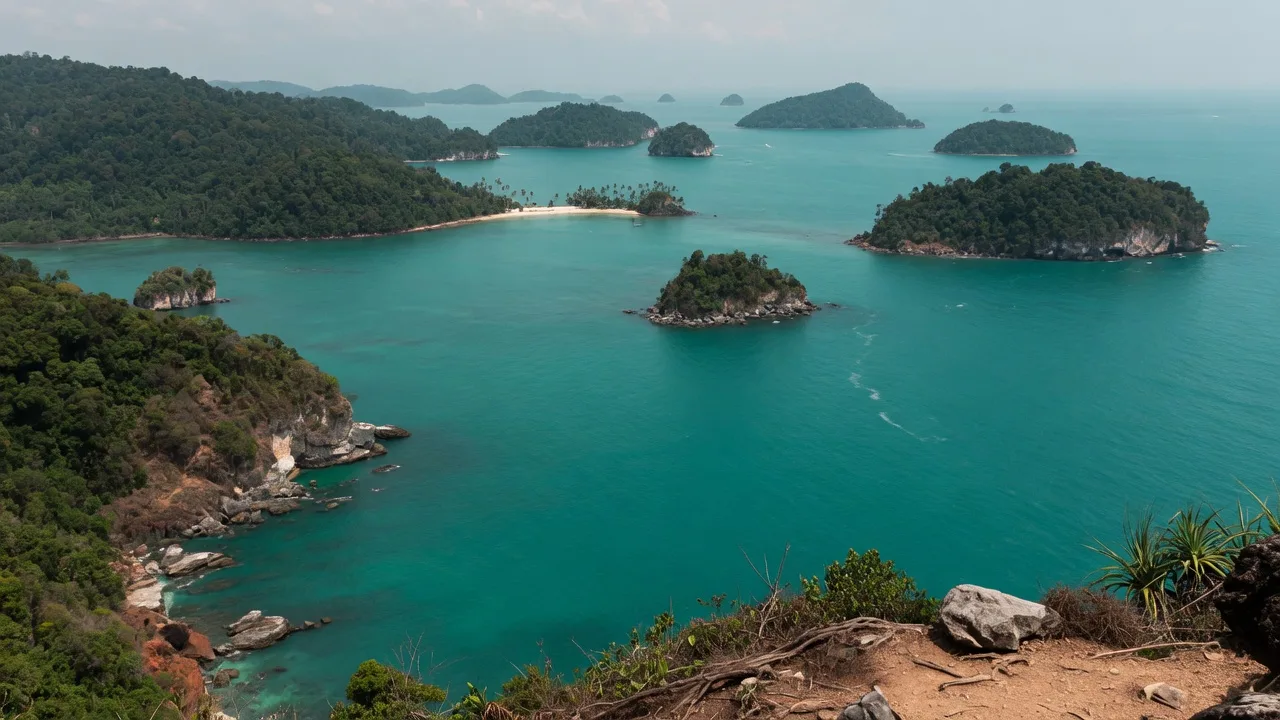
Thailand has on the order of 3,219 km of shore on two different seas. The Andaman faces west into the Indian Ocean: karst, reef, mangrove, real swell. The Gulf of Thailand curves from the southeast around to the south: calmer water, long sand, a monsoon that peaks when the Andaman is drying out. Between them sit 1,400+ islands, from Phuket at 543 km² to rocks that barely break the surface. Many are marine parks. Together they are why people still type “Thailand” into a flight search and mean a beach.
Pick one sea per short trip. Which coast.
| Andaman | Gulf of Thailand | |
|---|---|---|
| Ocean | Indian Ocean, west-facing | Semi-enclosed gulf, east and south |
| Typical character | Karst, reef, swell, mangrove | Long sand, shallower, calmer |
| Basin depth | Deeper shelves; real currents | Often cited ~45 m average; warm |
| Prime visitor months | November–April | January–September on many beaches |
| Hard marine-park close | Similan / Surin ~16 May–14 Oct 2026 | Few seasonal island shutdowns; rain Oct–Dec |
| Usual doors | Phuket, Krabi, Trang, Satun / Pak Bara | Bangkok for the east; Samui / Trat / Chumphon for the gulf islands |
Twenty-plus marine national parks sit on these two shores. The DNP two-tier gate still applies on the sand: cash, wristband, last boat. Park permits.
Andaman coast
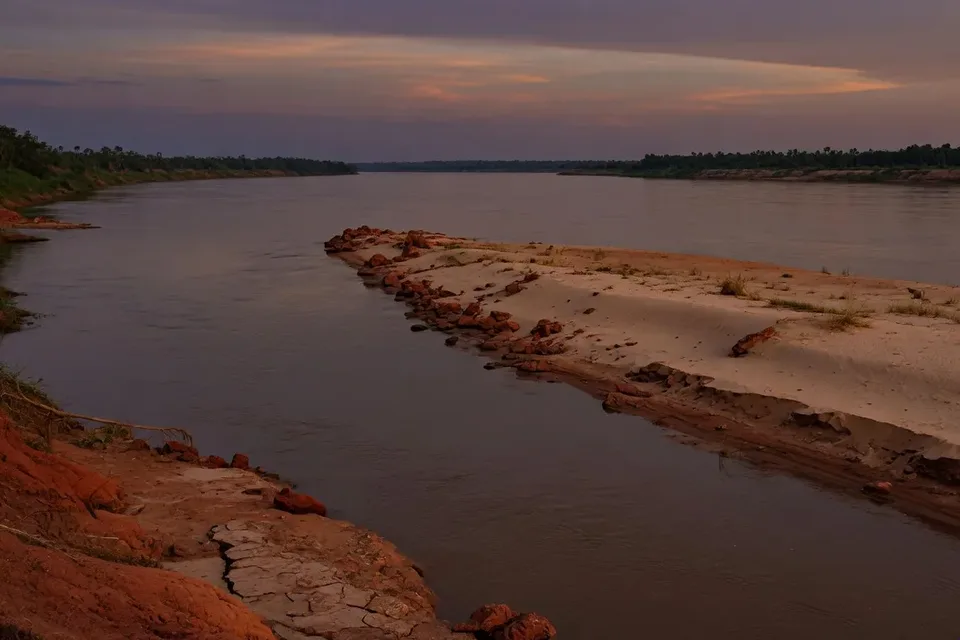
From Ranong at the Myanmar border through Phang Nga, Krabi, Trang, and Satun.
- Karst — pillars, stacks, mushroom rocks. Phang Nga Bay is the postcard: hundreds of limestone islands. James Bond Island (Ko Khao Phing Kan) and the Hong Islands are the named ones; the geology is the point.
- Deeper, more dynamic water than the Gulf — better diving visibility in season, stronger currents, worse boats in the southwest monsoon (May–October).
- Reefs — finest around Similan and Surin (both marine parks). Whale sharks, mantas, density.
- Mangroves — Phang Nga and Krabi especially. Nurseries, storm buffers, carbon.
Similan closed about 16 May–14 October 2026; open about 15 October–15 May. Foreigner adult park fee commonly ~500 THB; daily cap cited 3,850. Park permits, Andaman coast.
Key Andaman islands
| Island / group | Province | Pin |
|---|---|---|
| Phuket | Phuket | Largest island, 543 km², bridged, international |
| Phi Phi | Krabi | Don inhabited; Leh = Maya Bay under caps |
| Similan | Phang Nga | 9 islands; diving; seasonal close |
| Surin | Phang Nga | Moken community; snorkel flats |
| Ko Lanta | Krabi | Two islands, bridge, longer beaches |
| Ko Lipe | Satun | Far south, Tarutao park, Walking Street reef |
| Ko Tarutao | Satun | Former prison, wild park |
| Ko Yao Noi / Yai | Phang Nga | Muslim fishing, rubber, low-key |
Gulf coast
From Trat at Cambodia, through Chonburi (Pattaya), Rayong, Prachuap (Hua Hin), Chumphon, Surat Thani, then the deep south to Songkhla and Narathiwat.
Calmer, warmer, shallower. Better swimming and kayaks. Rain peaks October–December (northeast monsoon), not May–October. That offset is the whole travel trick: Gulf often works when Andaman does not. Monsoon seasons, Best beaches.
Key Gulf islands
| Island | Province | Pin |
|---|---|---|
| Ko Samui | Surat Thani | Second-largest after Phuket; airport; coconut-and-resort |
| Ko Phangan | Surat Thani | Full Moon at Haad Rin; north is quiet |
| Ko Tao | Surat Thani | Dive school of the world |
| Ko Chang | Trat | Mountainous, waterfalls, east’s beach island |
| Ko Mak | Trat | Flat, car-free, family |
| Ko Kut | Trat | Fourth-largest; still relatively undeveloped |
| Ko Samet | Rayong | Bangkok weekend, ~4 hours, park |
Koh Samui, Pattaya, Gulf coast.
The Samui/Chang bars are order-of-magnitude, not a cadastral survey. Phuket’s 543 km² is the figure we will pin. Ko Samui is commonly cited around 229 km²; Ko Chang around 210–220 km² of island, not the whole marine park. Tao is a dive speck you can walk across in a morning if you ignore the hills.
Ferry and speedboat grids change with the monsoon. Samui–Phangan–Tao is a daily triangle in season; Trat–Chang–Mak–Kut is a different pier. Andaman hops (Ao Nang–Phi Phi–Lanta, Pak Bara–Lipe) fail first when the southwest swell stands up. Last boats are curfews. Island hopping.
The peninsula and the canal that will not die
Southern Thailand pinches to about 44 km at the Kra Isthmus (Ranong/Chumphon). You can drive Andaman to Gulf in under an hour when the road agrees. A Thai Canal / Kra Canal to skip the Strait of Malacca has been proposed for centuries and remains politically and environmentally radioactive. Do not plan a cruise through it.
South of the pinch, the west stays mostly Buddhist Thai; the deep-south Gulf provinces (Pattani, Yala, Narathiwat) have a Malay Muslim majority. That is history and present politics, not a beach-club footnote. Ancient kingdoms.
Threats that are not a vibe
- 2004 tsunami — over 5,000 dead in Thailand; Khao Lak and Phi Phi worst. Early-warning kit exists now. It does not make an Andaman monsoon swell safe.
- Bleaching — 2010, 2016, 2024. Some reefs recovered; some did not. Coral reefs.
- Erosion — construction, sand mining, mangrove removal.
- Overtourism — Maya Bay closed for years; caps are the new normal.
- Plastic — still a marine problem; bag bans and clean-ups are not a solved equation.
A Fenteer dry bag, black, 10 litre for the longtail. A rash vest instead of slathering a reef. Last boats are curfews. Marine park cash. Snorkel or dive.
Two seas, one peninsula, different islands
Andaman islands (Phi Phi, Lipe, the Similans, Surin) sit in deeper, clearer dry-season water and shut or suffer in the southwest monsoon. Gulf islands (Samui, Phangan, Tao, Chang) are shallower, more palm than karst, and often the July plan. Ko Tao exists because certifications still run when Phuket dive boats are tied up.
Counts in tourist copy (“1,400 islands”) are a rounding of every rock that pokes out at low tide. Plan with names and months, not with a total. Ferry times are weather. Last boats are last. Which coast, Park permits if the island is a national park.
Next
Which coast, Andaman coast, Best beaches, Coral reefs, Island hopping.